Vector @_vector15
Software engineering intern @ Startup | Quant research @ WorldQuant Brain | Polymath maxing github.com/vector15-05 127.0.0.1 Joined February 2025-
Tweets3K
-
Followers566
-
Following429
-
Likes39K

I was laid off so I rebuilt their product but better (in 2 weeks from scratch) Open Canvas - a multiplayer site builder with an agent at the cursor. Most website builders ask you to fill in a template.I built one that lets you design - on a free-form canvas, with an AI agent at your cursor, where your whole team co-edits live and visitors see your publish update without refreshing. What makes it different: • Drag 14 design primitives anywhere — not into fixed slots • AI agent edits in plain English, you preview before it lands • Real-time co-editing (Yjs CRDT, Figma-style cursors) • Publish → every open visitor tab updates in <100ms Under the hood: one Cloudflare Worker, serverless Postgres, a first-class CMS, version history, a blocking accessibility audit, AI image gen, custom domains — all shipping as pure HTML, zero client-framework weight. It's MIT-licensed and built in the open

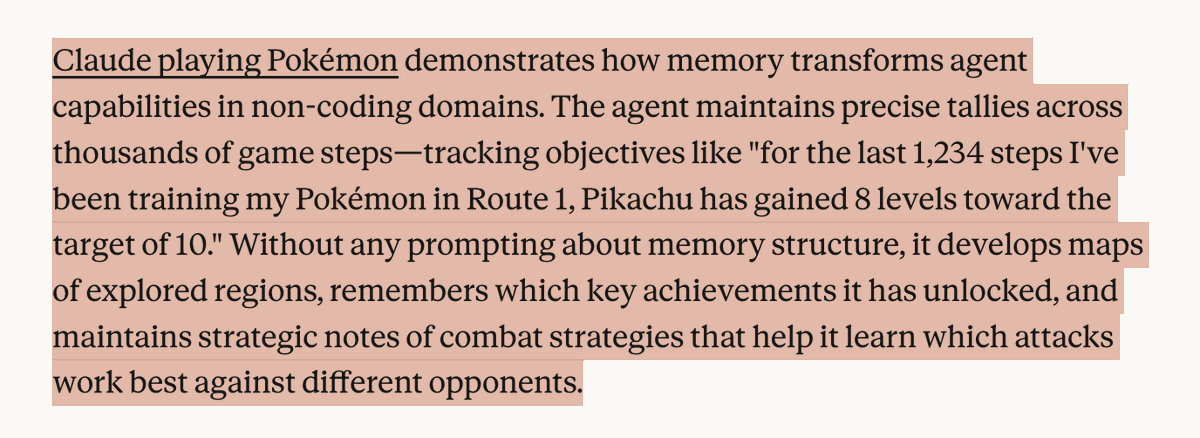
i love how anthropic keeps using pokemon as a benchmark for claude

@vennictus Literally just finished it last week It's so damn peak
@jerkeyray @harshal11_11 Is it worth watching? Been on my to watch list for a while now

wrote a small ~10 min beginner blog on chrome extensions and thinking through product ideas [link in comments]

Microsoft when you win in solitaire:


Yep You don't rise to the level of your goals, you fall down to the level of your systems

i was thinking most ppl keep saying i wanna start gym, read books, do this, do that, but are never able to bc they just keep thinking that and don’t come up with an action plan. for me its logical if i wanna start smth new, i need to change my routine and commit to it. thoughts?
@dextertwts @abhay4798 Close your eyes and hire this guy

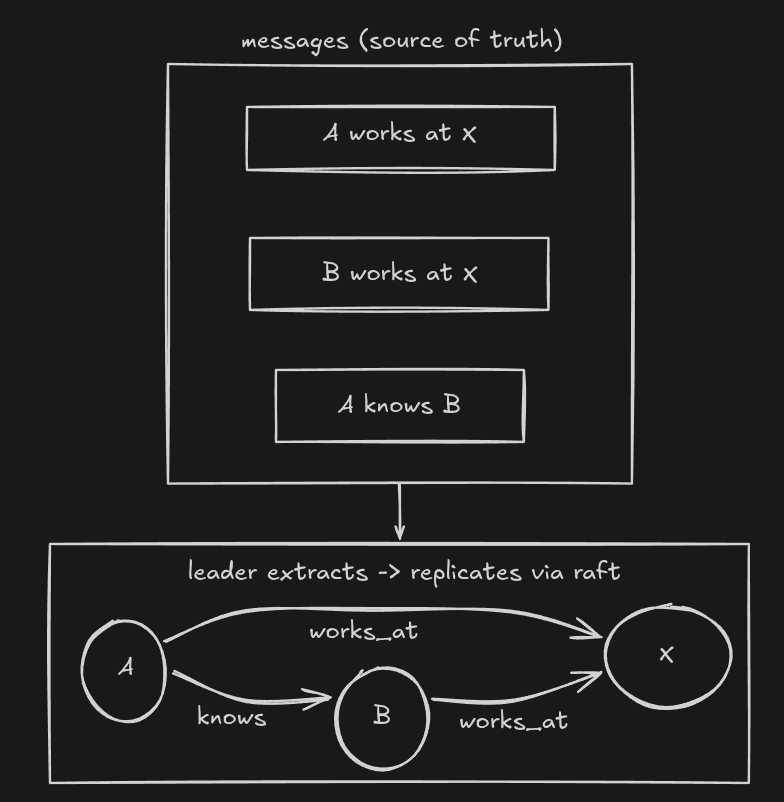
and now, stage 2 is wrapped up a lil recap: stage 1 was "how do we store memory durably?". and the goal of stage 2 was to answer "how does memory become knowledge?" the answer ended up being a knowledge graph. messages still go in the same way, but now the leader also extracts entities and relationships from each one, and replicates those through raft as a proper command. so every node ends up with the same graph so instead of only doing semantic search, you can now directly ask "who works at X?" or "find the path from A to B" the distributed part was a bit tricky to get down. extraction had to go through Raft because LLM extraction isnt deterministic, and per node extraction would have given you divergent graphs. so the leader extracts once and replicates everywhere messages stay the source of truth. the graph is the derived state built on top of them up next: collective memory. multiple autonomous systems sharing one knowledge substrate we're getting closer to answering the bigger question :) repo below ^^
so, stage 1 of engram was about making memory survive failure. basically turning it into a distributed system from the previous single node system and so now, we have 3 nodes, raft, grpc, leader election, log replication, failover, and all that fun distributed systems stuff


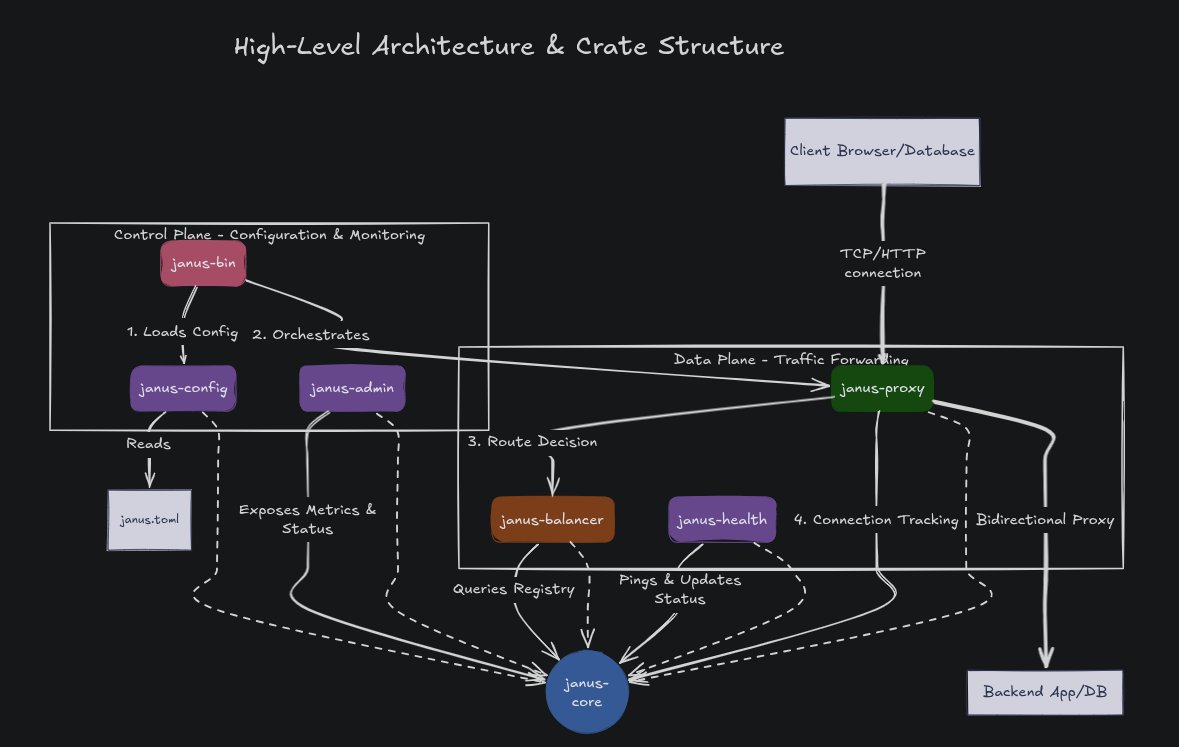
lore 1: high-level architecture and crate structure to separate control from performance in my hybrid load balancer project, i divided things into two worlds across a cargo workspace: data plane: - 'janus-proxy' (network i/o) - 'janus-balancer' (selection algorithms) control plane: - 'janus-config' (configuration management) - 'janus-admin' (metrics api) - 'janus-health' (health checking) - 'janus-bin' (orchestration) what is a data plane? - it has one very simple role: handling incoming client connections. - speed is critical here, which is why it must avoid slow system operations. - its job is to accept connections, read and write bytes, decide where traffic should go, and forward the data. what is a control plane? - it is responsible for system management tasks such as configuration, health monitoring, metrics collection, startup, and graceful shutdown. - the data plane should only focus on routing and handling traffic. - you do not want the data plane worrying about configuration changes while processing incoming requests. - a request should never have to wait because someone opened the dashboard, reloaded a config file, or checked metrics. the control plane takes care of those responsibilities and makes the data plane's job easier. why this division? - let's say your load balancer is handling 100k requests per second. - if every request had to check whether configurations changed, whether a backend became unhealthy, or whether some metric was updated, you would waste a lot of time and eventually money. - why should your connection handler care about changes that might not even happen? - this is where the control plane comes in. - it maintains the system's configuration and state, then provides the necessary information to the data plane so it can focus entirely on moving traffic. communication between the data plane and control plane? - i said the control plane gives instructions to the data plane, but how? - everything that is modified by the control plane and read by the data plane is stored in a shared state module that both can access. - this shared state contains things like runtime server state, backend health metrics, routing information, and other important operational data. - the control plane updates it whenever changes happen, while the data plane reads from it during request processing without having to perform expensive checks itself. next upcoming topic: cli argument parsing & main entrypoint (janus-bin)
Janus - Building a hybrid TCP & HTTP/1.1 load balancer in Rust. github.com/omanshchoudhar…

My toxic trait is comparing myself to someone who has multiple times more experience than me, getting depressed for 10 minutes, then deciding I need to work even harder.
@malliktwts @sharpeye_wnl If only it was actually accurate HNSW ftw

Mr Y @DivyanshuCreat2
1 Followers 18 Following
Gracy Pawani @GracyPawani
316 Followers 1K Following CS freshman | | Learning to code and decode life

Maddy sharma @Maddysharm4r
0 Followers 12 Following

Mohammad Irshad @irshadsiddi1911
52 Followers 297 Following Math addict | 2⭐ @codechef |Undergraduate at NIT Durgapur
juggernaut @curlysaarthak
4K Followers 4K Following 21 | engineering | research | speedcubing | open to work


Ankit Gupta @ankitstage
193 Followers 130 Following Building https://t.co/fxKzW82B44 | Intelligent creative strategies for D2C Owners and Marketers | Helping you win attention & build in public | DM for collabs
Tinkerbell @Tinkerbellcodes
56 Followers 610 Following sleep • code • repeat what makes you think you're better than others?
Naga Vamsi @a4eiron
25 Followers 208 Following

yogesh @yogesh_chebrolu
13 Followers 205 Following 21, Engineering, AI Research Views on Equity Investments, Economics
Sangram Navale @sangram_navale
39 Followers 751 Following Memory Systems Validation @ Micron Technology, Inc. Systems Programming | Semiconductors
Dev moondra @DevMoondra38023
6 Followers 96 Following
Anurag Kumar @anuragak021
159 Followers 157 Following Quant Enthusiast . Low Level . Linux . Embedded Firmware @Xbattery_
Prateeti Nigam @PrateetiNigam27
146 Followers 4K Following
Dhruv @Drv4ever632
49 Followers 49 Following Tech enthusiast | emerging web Developer | aspiring engineer
Sudam Majhi @sudammaijhi09
610 Followers 2K Following Engineer learning Finance | F1 🏎️ | Gym bro 💪| Replying to everything wrong on timeline 😈

Chaitanya Madavi @Chaitanyatwts
2K Followers 425 Following 21 | Competitive Programming and Math | Under confident era
Dr. Bartanwala @drrrrrrrr186
193 Followers 561 Following 3dprintersexual --------------------- pfp by @microtaskq
Preeti @studylog76
2 Followers 84 Following Web Dev in progress 👩💻 30-week #100Devs💻 Documenting my journey 📔 Building. Learning. Growing. 🌱 Building real-world projects 🚀 & connections💡
Harshit Khosla @Harry_The_Nerd
3K Followers 1K Following Software Engineer @EPAMSystems | 24 | I code, animate, write, study physics & mathematics | Oh, and I love Spider-Man & music Writing - @wtf_times
yatharth @yatharth96644
0 Followers 3K Following

Sumit @Sumit250412
32 Followers 93 Following Full Stack + AI Engineer Building scalable systems, RAG pipelines, and modern web products.




yamashita @yamashita271
67 Followers 356 Following God grace rests upon everyone, but only those who work with that grace truly make something of it.
R.A Costeau @Deprivedmik
0 Followers 707 Following
Feras Dev @Feras_Dev
8 Followers 299 Following
Pari Shaw @PariShaw93210
19 Followers 1K Following
Shaurya Pethe @rshaurya_
8 Followers 114 Following probably on my laptop or sleeping | 20 | figuring out my place in tech | MLE under construction
Prajjwal Kumar @PrajjwalKu99107
0 Followers 16 Following
acleyyy @acleyyi
163 Followers 3K Following

divyasshree @divyasshree_
143 Followers 2K Following Building useful things at @bitquery_io own project: Chaos Markets live @Solana devnet https://t.co/PwfHKBih6B


Hiranmaya Panda @Hiranmaya_007
23 Followers 2K Following


krishna @iamjustkrishna
92 Followers 601 Following i just do things | intern @ai4bharat https://t.co/wXzfZ6brHP
levi @levidiamode
5K Followers 659 Following 365 days of GPU programming ▓▓▓▓▓▓▓▓▓▓▓▓▓░░░░░░░░░░░░░░░░░░░░░░░░ 155/365


Prannay Hebbar @Pran_Ker
852 Followers 2K Following Post training (CUA and coding) / prev. ai researcher @ agi inc. / @stanford
kanishk @kanishkpaul
83 Followers 410 Following 20. ccu. researcher by day, philosopher by night. final year cs student. prev humanoid robotics research, founding eng. 7x hackathon ws. e/acc. tat tvam asi.


Aradhye Agarwal @AradhyeAgarwal
733 Followers 508 Following Agentic safety @MSFTResearch, Incoming MS @CarnegieMellon, ex-Google
Ankit Gupta @ankitstage
193 Followers 130 Following Building https://t.co/fxKzW82B44 | Intelligent creative strategies for D2C Owners and Marketers | Helping you win attention & build in public | DM for collabs
I'M UNKNOWN @Earth_1729
148 Followers 0 Following The struggle itself towards the heights is enough to fill a man's heart. One must imagine Sisyphus happy.
Chaitanya Madavi @Chaitanyatwts
2K Followers 425 Following 21 | Competitive Programming and Math | Under confident era


Devanshu Jain @Jain_Devanshu_
195 Followers 330 Following Building AI tools for automation | CSE | Documenting everything I learn in public | Researcher | Founder
mihir @mihir_twt
249 Followers 223 Following caffeine enjoyer | incoming 2nd year ug | currently interning at an NGO :)
Shreyaaaa✨ @shreyadoesstuff
742 Followers 399 Following CE'29 | trying to do my best | I cycle sometimes

namit. @sigmoidfunc_
269 Followers 198 Following research @iiscbangalore | prev- pragyaai (bits goa), gsoc @ psf, 3x- startups | dms open
Shresth @kistij
2 Followers 26 Following Codeforces 2000 | Ex-DSIT foundry (UK Gov) | Ex-Oxford intern | DMs open
Krrish Tripathi @KrrishTripathi2
18 Followers 16 Following CS Student | ML Engineer | Quant | Building AI systems, agents & infra Open-source contributor • Shipping daily | https://t.co/ybmcXuy9GM

nisarga @ni5arga
18K Followers 47 Following 19 // software engineer, hacker & CTF player // https://t.co/jXBFqtUJef // 🏳️🌈 enby sub
Akash Kumar @akash_kumar_dev
773 Followers 735 Following AI Engineer Intern at SpikeAI | Building @BrowsePing | C4GT DMP'24 | Codemod Kickstart | NIT UK-26 | passionate #SoftwareDev & #Cybersecurity |


Himanshu✧ @HimanshuBijja
59 Followers 119 Following some one who finds dsa fascinating, Intern at Telengana police academy, 5x Hackathon winner
Dhvanit @dhvanitcantcode
132 Followers 269 Following Building backend systems that survive production | Retries, failures & distributed systems | Built Initex & https://t.co/zHA8TMCLK7 | Open for freelance
Vedant @vedantdotrpm
4K Followers 1K Following 20 • Software Engineer • Full stack • prev 2x startups • 4x Hackathons 🏆 • Join https://t.co/8DPdEeIQut • DMs open
jpark @jparkjmc
9K Followers 1K Following ceo @hillclimbai / ex pro valorant @misfitsgg research eng @googledeepmind
hopecore @dailyhopecores
61K Followers 1 Following posting hope core | spreading positivity | x has become too hateful | @nocontextmemes
Siddhi @siddhich47
520 Followers 131 Following 17 | Tech | Exploring AI/ML & Data science | sports person 🏀
Dr. Bartanwala @drrrrrrrr186
193 Followers 561 Following 3dprintersexual --------------------- pfp by @microtaskq
Ankit Sisodya @Ankit_Sisodya
2K Followers 382 Following SWE Intern @Google | GSoC’26 Mentor | ICPC Asia West Regionalist ’25 | Expert @Codeforces | Guardian @Leetcode | 5 ⭐ CodeChef | BIT CSE’27

Parth Pariwandh @JUMechTard
128 Followers 693 Following B.E Mech @ Jadavpur ’27 | Intern @ Railways + MES (GoI) | Research @ ISI | IITG TIDF | GIS @ ISA | Quants | WorldQuant Gold | RMO | GATE ME/DA Q | LIMIT AIR 28


Vatsa Pandey @_vatsadev
854 Followers 691 Following ad astra per aspera currently @reductoai prev intern @moondreamai @so_claros
Rishabh @Rish_builds
182 Followers 1K Following CS'29 || Currently doing DSA and Development | Grit is all i have.
Yellow void @yellow_void22
436 Followers 320 Following 18 • AI • ML • Anime • Calisthenics • Manhwa • Manga


PCT @PCTprobability
4K Followers 1K Following AtCoder highest 3000+ CodeForces highest 3000+ (元 ABC),ARC,AGC Writer IOI 金
Devaansh Bhandari @ThisIsBhandari
4K Followers 1K Following Founding Engineer @ YC Startup | IIT BHU Helping builders scale startups & secure high paying tech jobs
Hriday Kadam @hridaykadam
2K Followers 1K Following Building {REDACTED} // national finalist @redbull // club leader @hackclub // fellow @fdotinc, @theresidency
Divya Saini @dibbaa_code
7K Followers 660 Following Building software systems prev @amazon | @joinodf | ship-it @fdotinc | @_buildspace s5 winnerYou might like